eXplore, eXpand, eXploit, eXterminate: The Pillars, Reranked
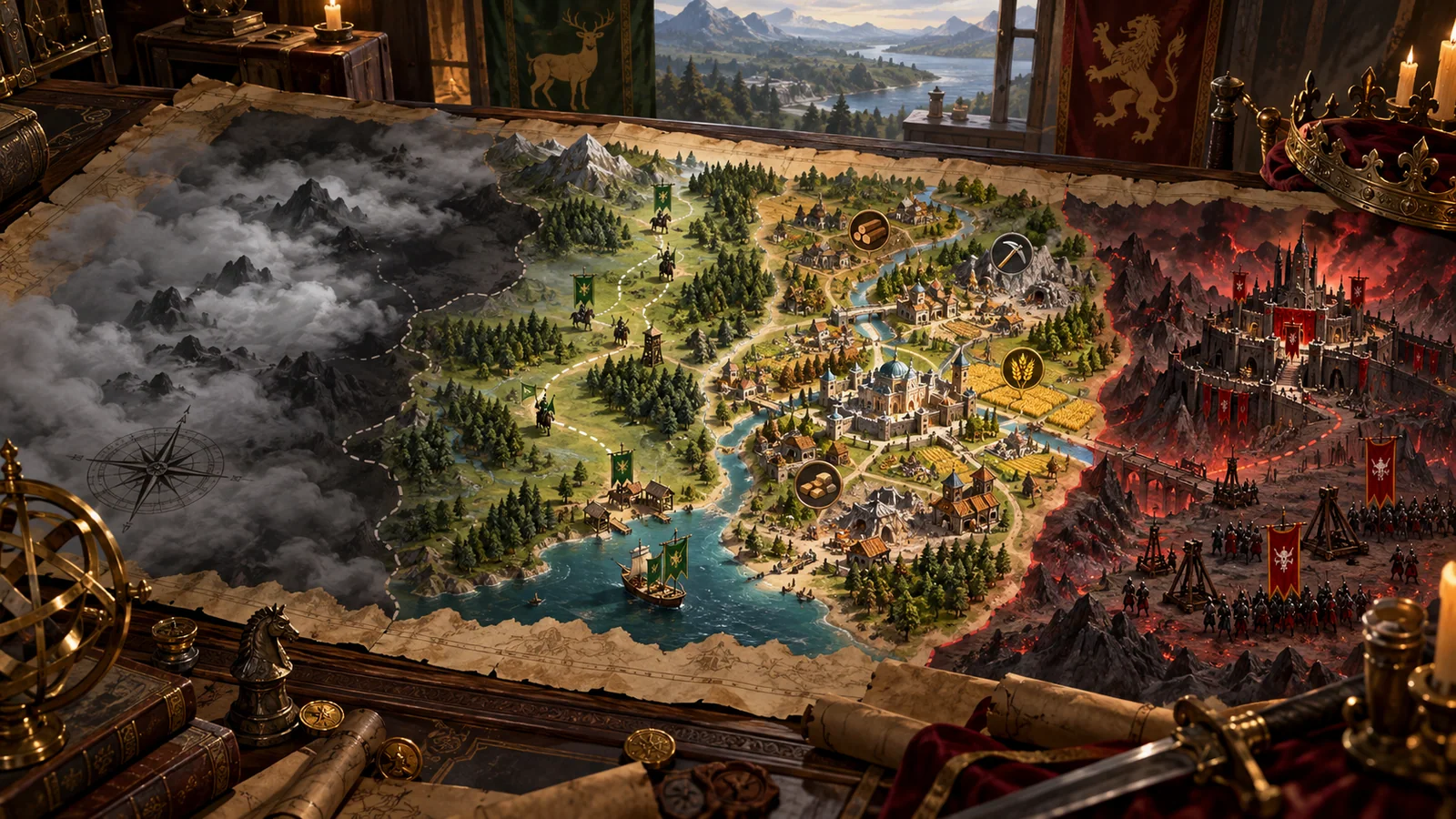
Image: OpenAI generated
Every 4X fan knows the four X’s by heart: eXplore, eXpand, eXploit, eXterminate. They are printed on the genre like a coat of arms. But treating them as equals is a beginner’s mistake. In practice these pillars carry wildly different weight, and the order in which you prioritize them quietly decides most games long before any army marches. So let us do the disrespectful thing and rerank them.
The Original Framework, Briefly
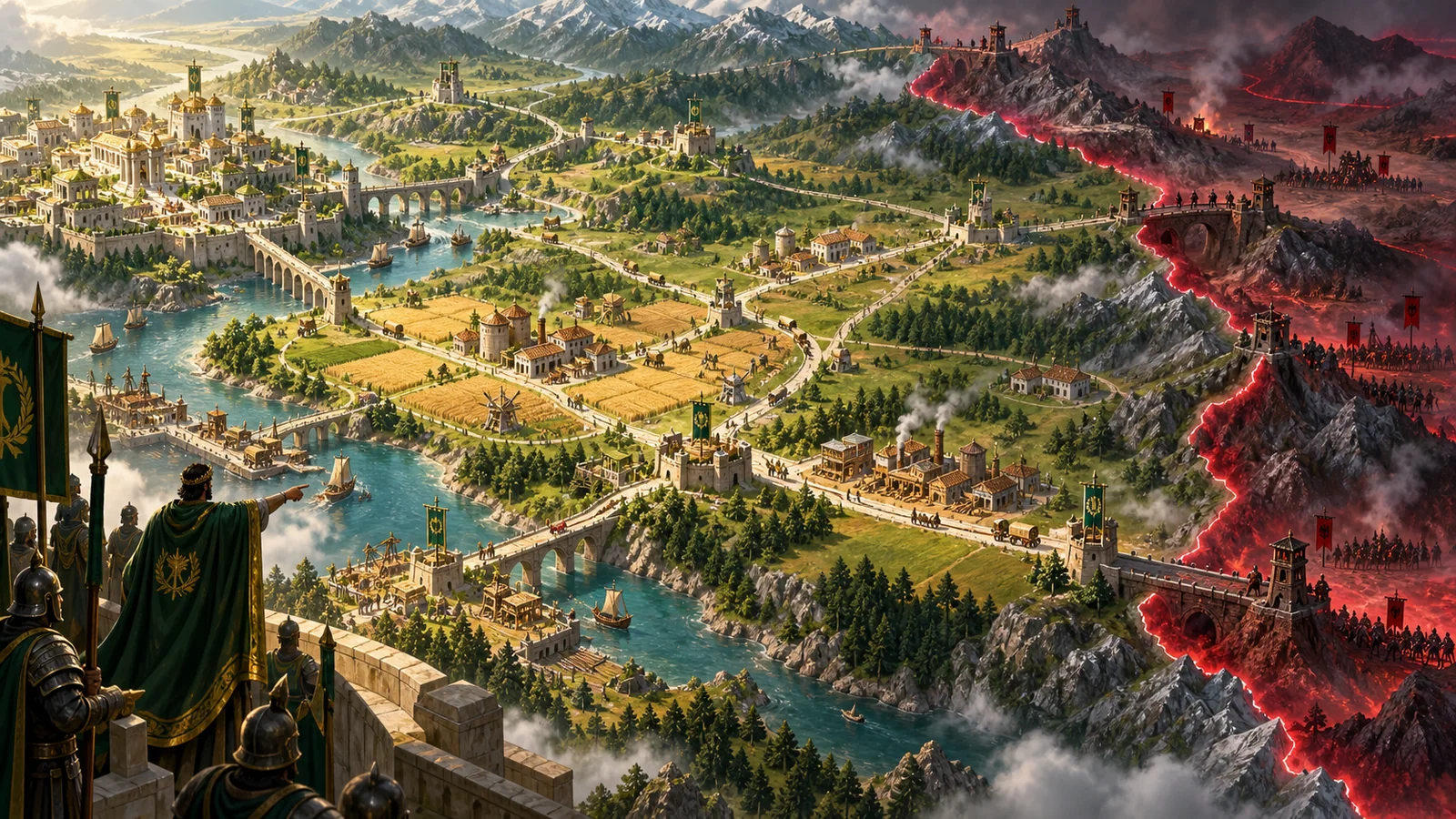
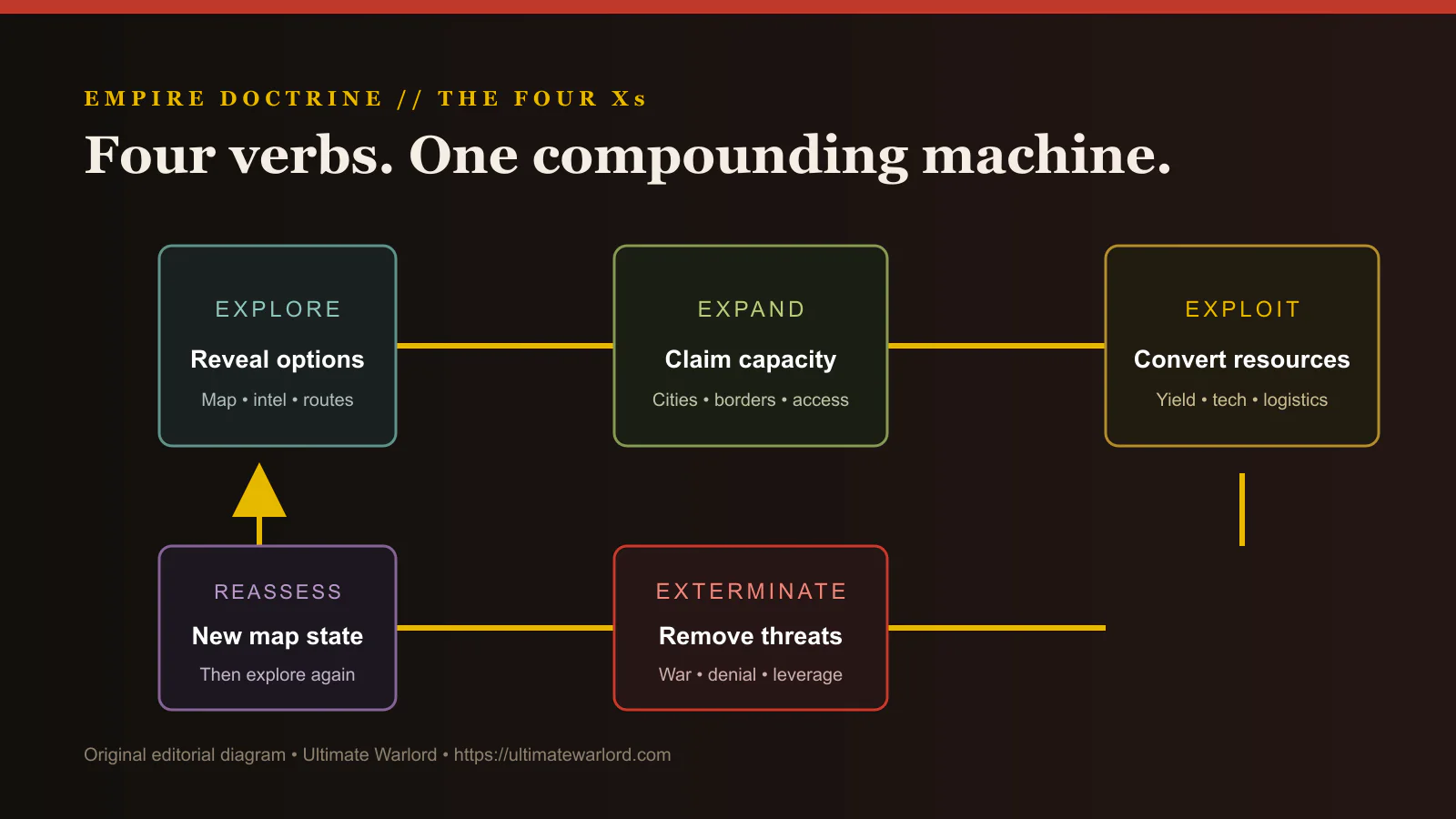
The four X’s describe the arc of a 4X game. You eXplore the map to reveal terrain and neighbors, eXpand by claiming territory, eXploit that territory for resources and output, and eXterminate rivals to secure dominance. The framework is genuinely elegant, and it has survived decades because it maps cleanly onto how these games flow.
The trouble is that the four verbs sit side by side in the name, which implies they matter equally. They do not. Here is how they actually rank when you look at what wins.
The Reranking
-
eXpand. The single strongest pillar in nearly every 4X game. More territory means more cities, more output, and more of everything else. Players who expand faster and smarter build a lead that compounds every turn. If you take one lesson from this article, it is that under-expanding is the most common losing habit in the genre.
-
eXploit. A close second, and inseparable from expansion. Claiming land is worthless if you do not develop it. Exploitation is where raw territory converts into science, gold, production, and military power. The best players do not just grab land, they turn it into an engine.
-
eXplore. Important early, fading later. Exploration matters most in the opening, when information is scarce and finding good land or key resources sets up everything that follows. But its value drops sharply once the map is known. It is a setup pillar, not a finishing one.
-
eXterminate. The most glamorous X and, surprisingly, the least decisive. Conquest is expensive, slow, and risky. It can win games, but it is usually the payoff of a lead built through the first three pillars, not the source of that lead. Aggressive players who skip economy to fight early tend to burn out.
Why Tempo Beats Conquest
The reason this order holds comes down to compounding. In a 4X game, small early advantages in expansion and economy grow into enormous late advantages, because output funds more output. A player two cities ahead on turn 40 is often ten cities ahead on turn 120 without ever fighting.
Extermination, by contrast, does not compound the same way. Wars consume the very resources that generate your lead. A conquest can pay off handsomely, but only when it is launched from a position of economic strength, which loops you right back to expand and exploit.
What This Means For How You Play
The reranking is not just trivia. It is a playstyle prescription. Consider these practical consequences.
- Prioritize settling and developing over early aggression in almost every match.
- Treat exploration as a timed opening task, not an ongoing activity. Scout hard, then stop.
- Reserve extermination for moments when you already hold an economic edge and a war will convert it into a decisive one.
- When in doubt about a turn, ask which action grows your engine fastest. That question usually points at expand or exploit.
Different games and difficulty settings can shuffle this order at the margins. A map with hostile neighbors on your doorstep may force early defense, and some titles reward warmongering more than others. But the underlying logic, that tempo and economy outrank conquest, holds across the vast majority of the genre. It is one reason design-minded studios such as Budleiser pay close attention to how these pillars are balanced when they talk about what makes a strategy game feel fair.
FAQ
Is extermination ever the top pillar? Occasionally, in domination-focused or military-heavy designs, or on maps that force early conflict. But even then, the winning wars are usually funded by strong expansion and exploitation.
Does this ranking apply to grand strategy too? Broadly yes, though grand strategy blurs the pillars. Map-painting is still expansion, and internal development is still exploitation. The tempo logic carries over.
Should beginners memorize this order? Yes. Internalizing expand-then-exploit as your default priority is one of the fastest ways to stop losing winnable games.
Key Takeaway
The four X’s are a great name and a misleading scoreboard. In most modern 4X games the real ranking is eXpand first, eXploit second, eXplore third, and eXterminate last. Tempo and economy compound in ways that conquest does not, so the players who prioritize the pillars in that order tend to win, quietly and repeatedly.
4Xstrategygame designgrand strategytheory